
2020
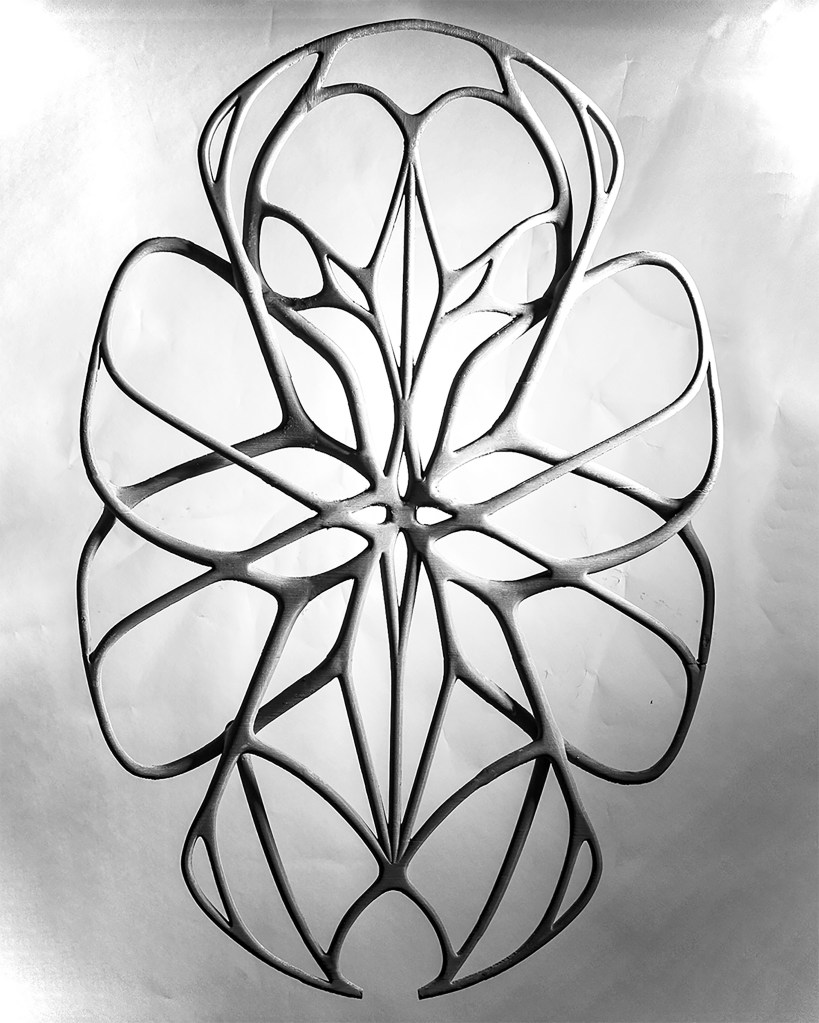
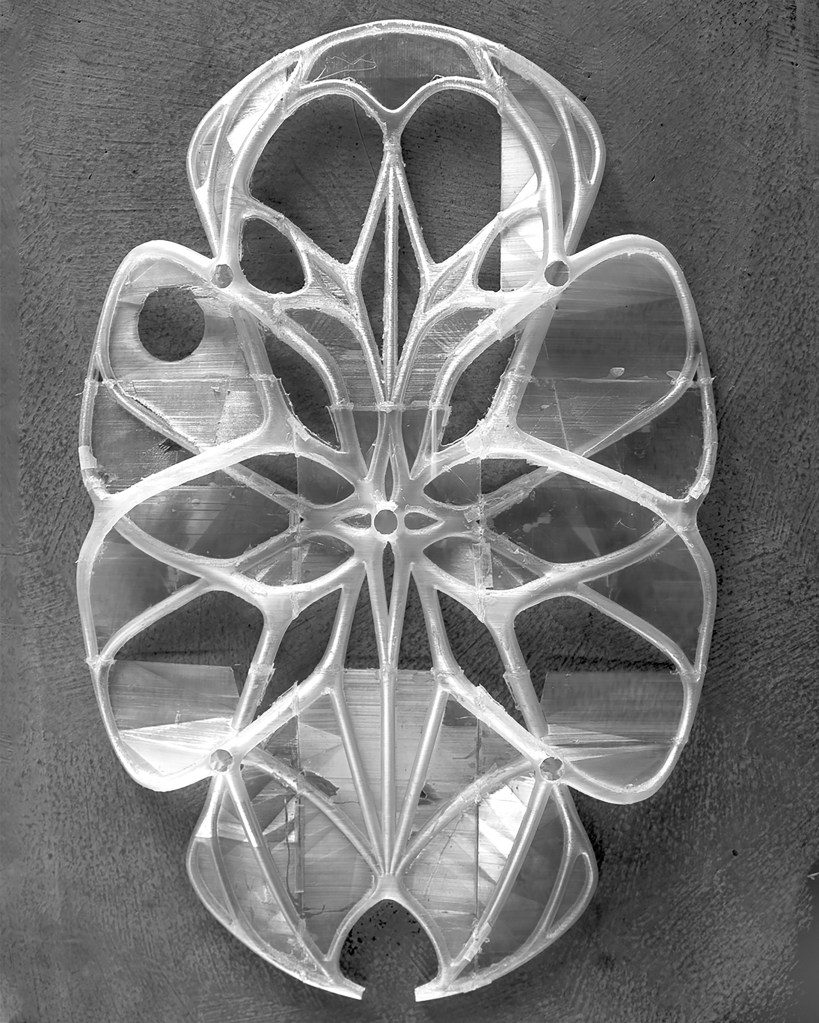
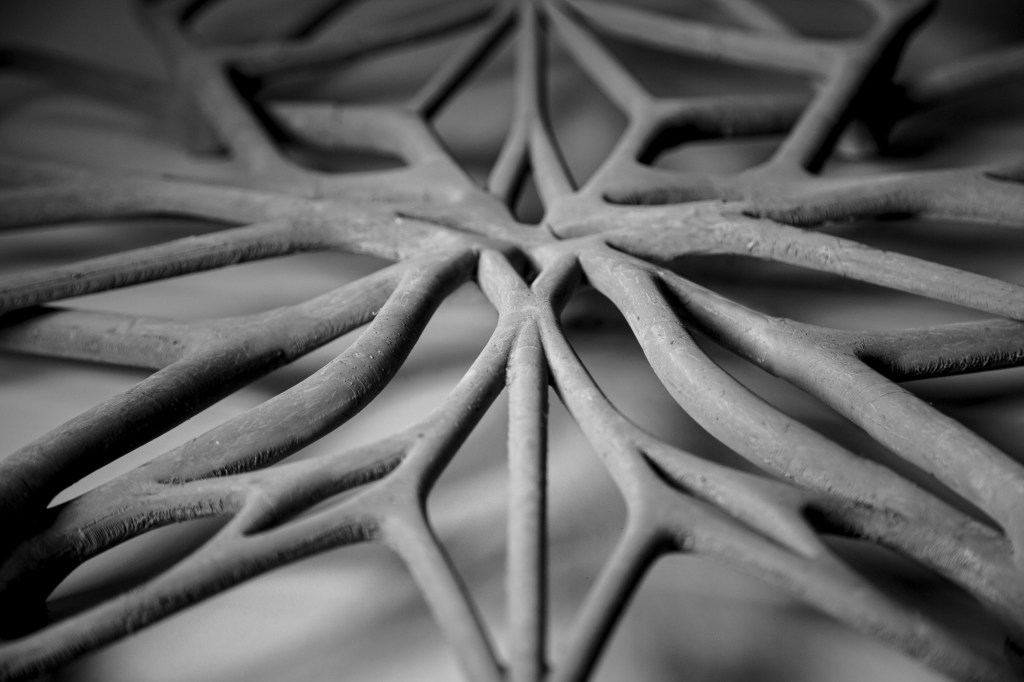
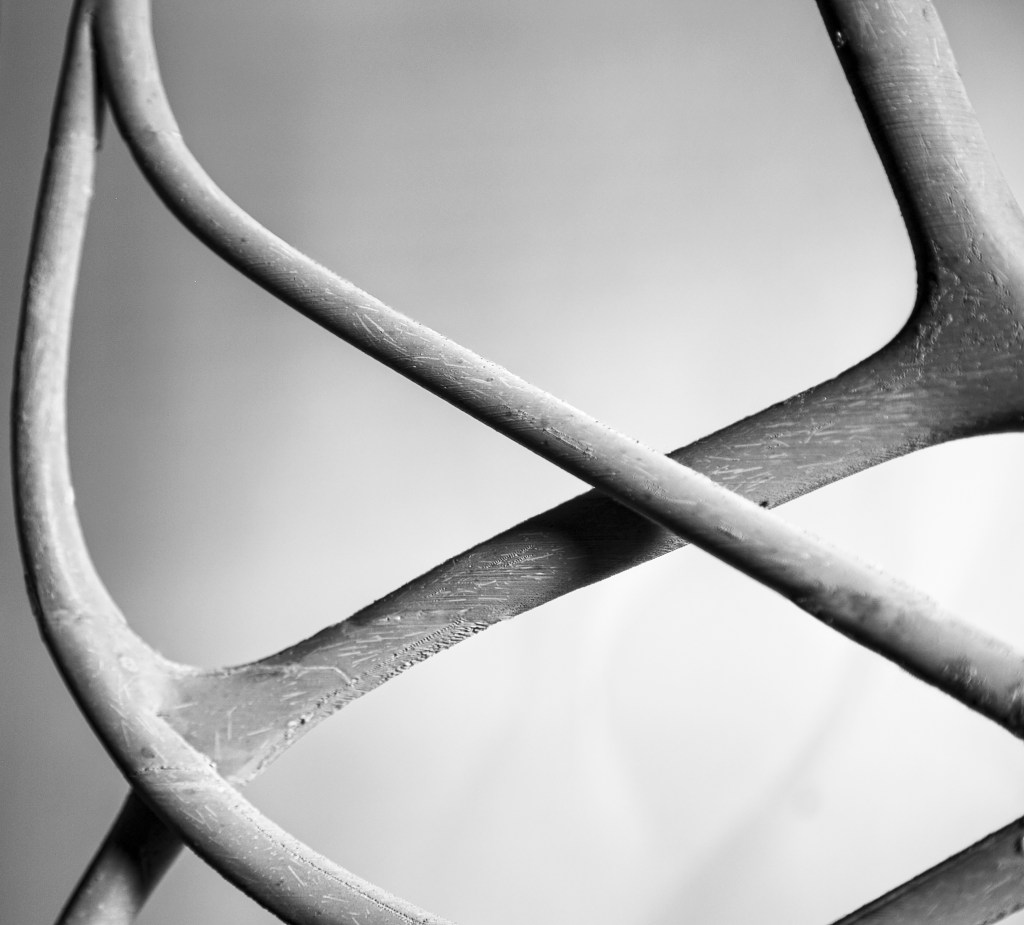
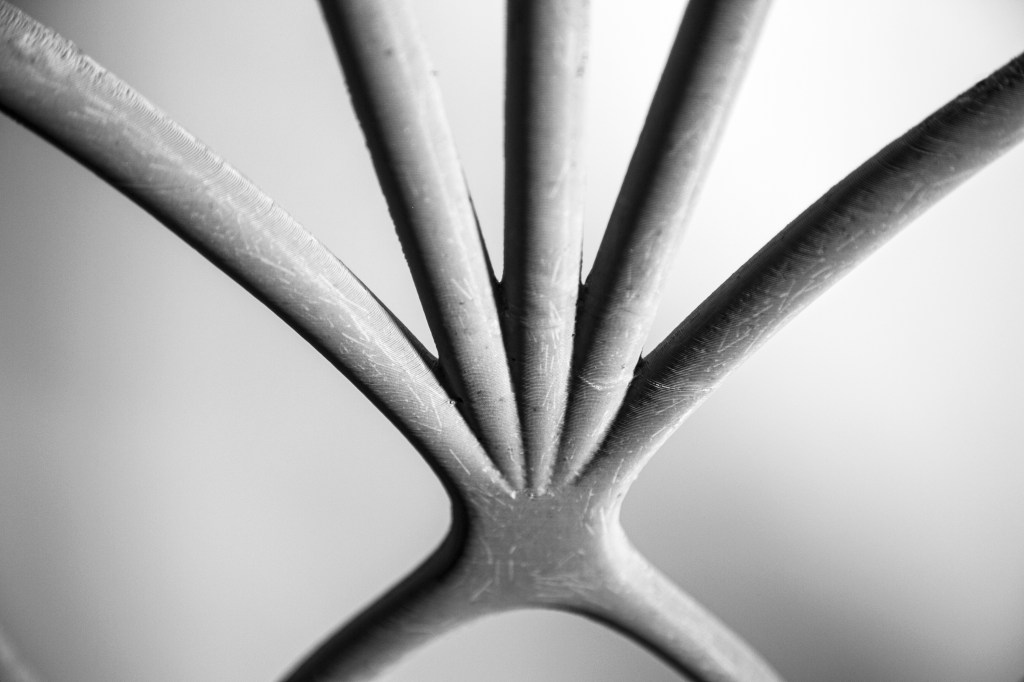
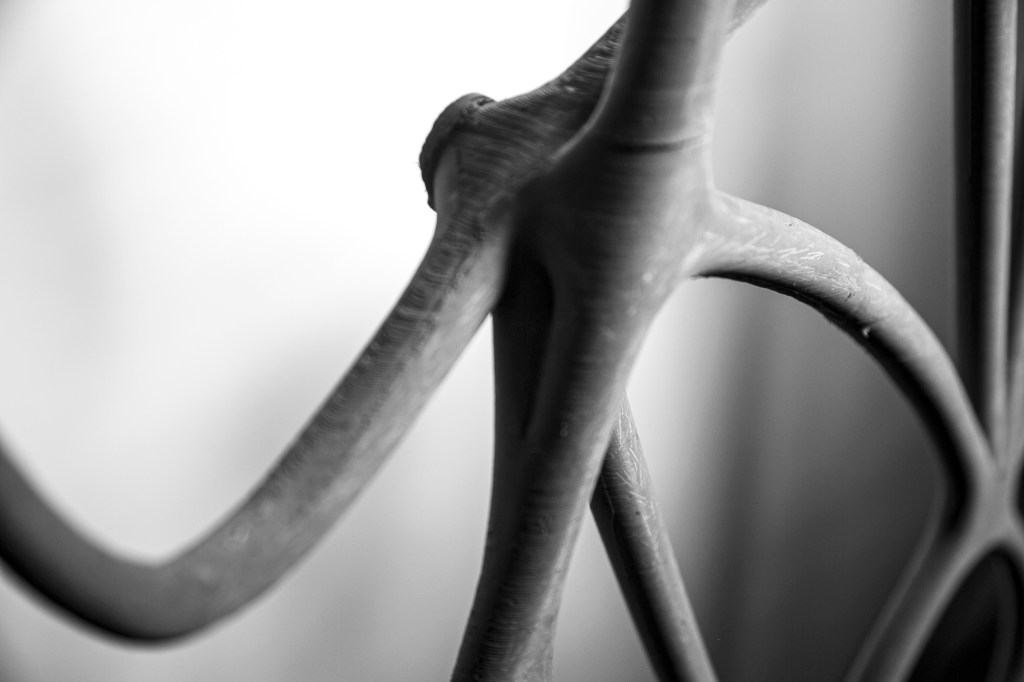
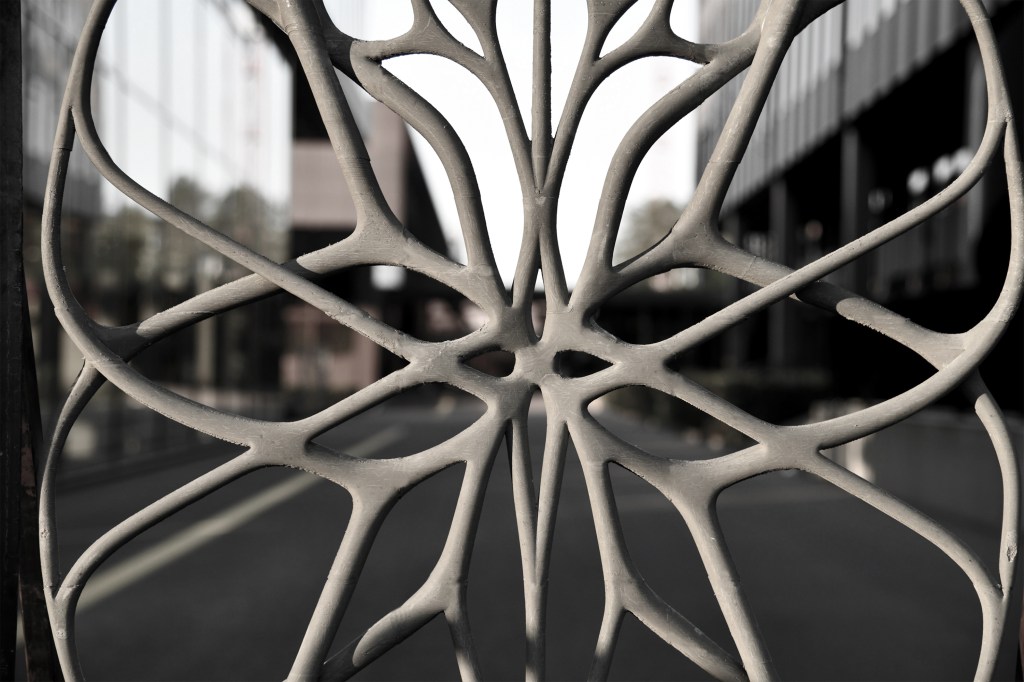
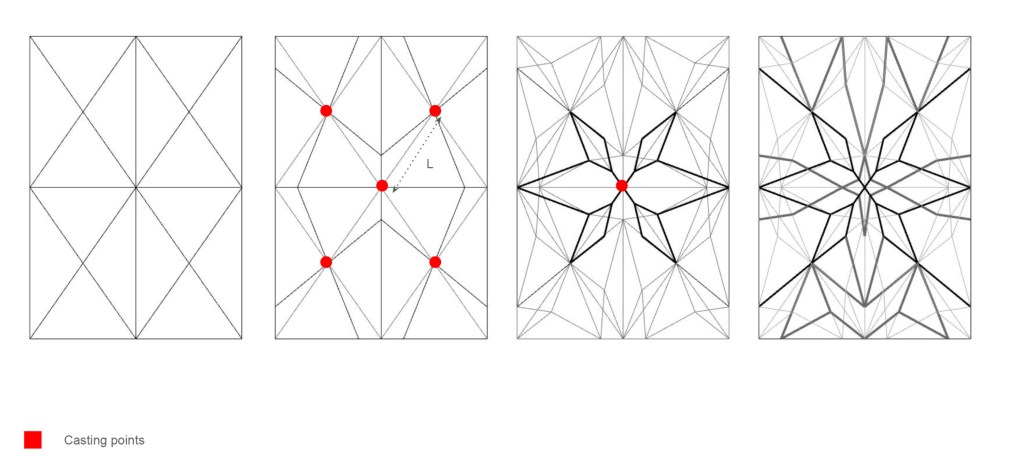
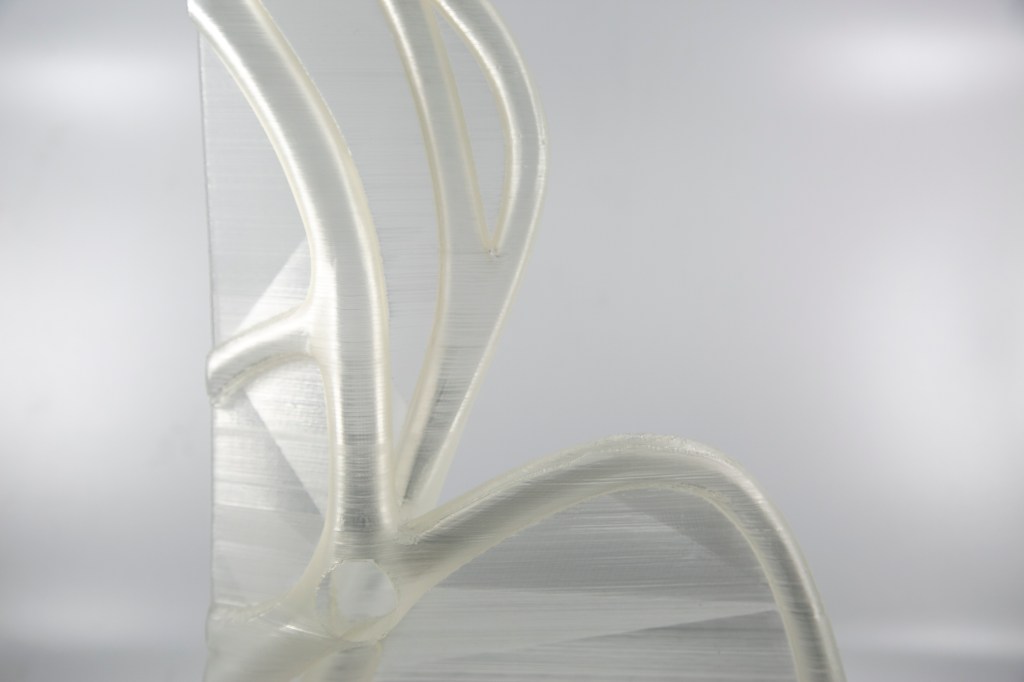
Filigree Concrete: The Architecture of Fibres reimagines a gothic tracery using steel-fibre-reinforced concrete cast in 3D-printed formworks. The tracery showcases an intricate network of thin organic concrete ribs only 12-15 mm in diameter. This complex geometry is possible due to the geometric freedom of 3D printing and the excellent structural capacity of ultra-high performance concrete.
The project is inspired by late flamboyant gothic flowing bar traceries. These featured an extreme reduction of structural cross sections and often included a layer of open traceries, positioned in front of the stained glass traceries, that created a sense of spatial depth.
Bringing the principles of late gothic architecture to the present day, high performance concrete enables even thinner cross sections due to its superior strength compared to stone; 3D printing enables a more differentiated spatial geometry beyond flat layers; and computational simulations enable a structurally optimised shape.
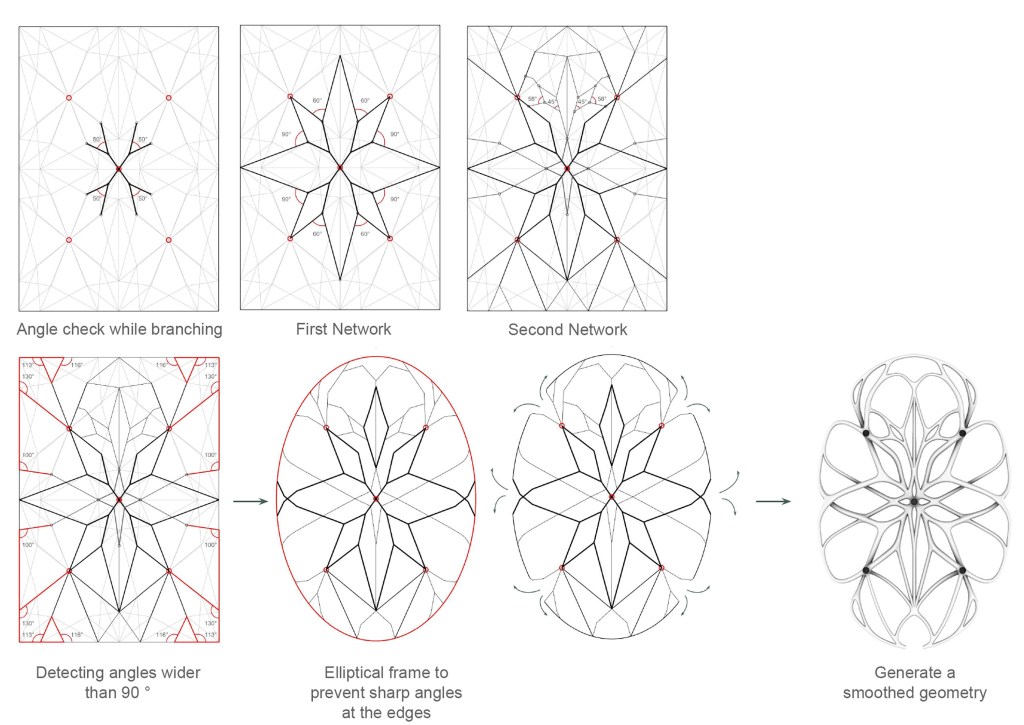
Computational optimisation is a straightforward process for homogeneous materials such as metals. Nevertheless, fibre-reinforced concrete can change its properties depending on the distribution of the fibres (behaviour known as anisotropy). Steel fibres are most effective when they are aligned with the tensile stresses and evenly distributed throughout the concrete. The orientation of fibres is highly dependent on the laminar flow of concrete during casting. The computational design of the reimagined tracery had to account for these fabrication constraints. The shape of the nodes, the angles of the ribs and the location of the casting inlets had to be carefully considered to ensure an ideal distribution of fibres.
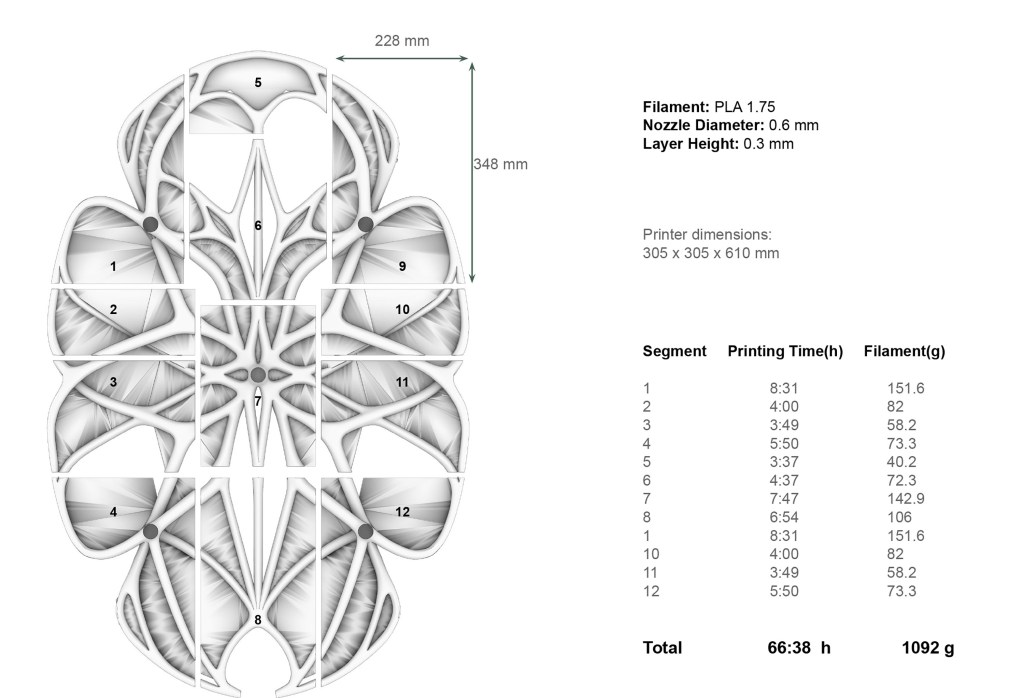
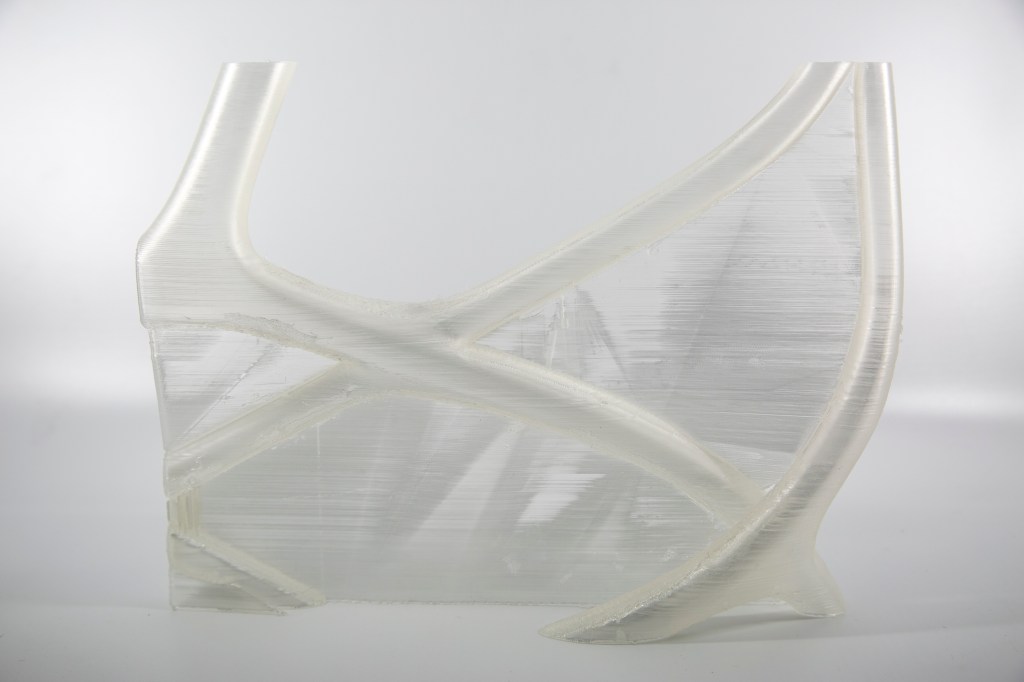
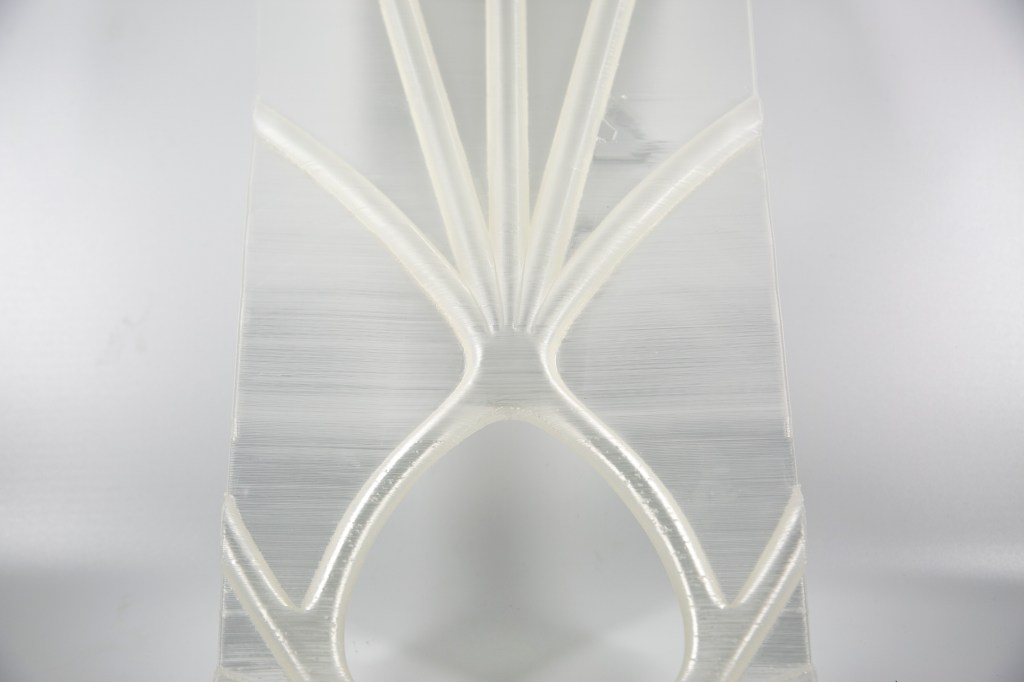
The computationally designed shape was produced using submillimetre plastic 3D printed formworks, that ensured an easy demoulding. The resulting concrete element, measuring 70 × 50 × 15 cm, weighs less than 7 kg. The structural capabilities of steel-fibre reinforcement, together with the geometric freedom of 3D printing and the possibilities of computational design open up radically new perspectives for using concrete in unprecedented structural applications.

 ioulios georgiou